Trump's Push for Iranian Regime Change Carries Major Risks at Home and Abroad, Analysts Warn
President Donald Trump appears to be pursuing a foreign policy course aimed at Iranian regime change, a strategic direction that analysts describe as one of the most consequential and risky gambles of his presidency. The approach could force Trump to simultaneously manage a potential military conflict in the Middle East while battling political opposition on the domestic front.
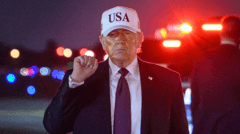
Trump's Iran Strategy Raises Stakes on Multiple Fronts
President Donald Trump is advancing a foreign policy posture toward Iran that analysts are characterizing as a high-stakes bet on regime change — one that could define, or destabilize, his second term in office.
According to analysis from BBC News, the president's approach to Tehran carries significant risks that extend beyond the Middle East, potentially dragging the administration into a two-front struggle: a military or geopolitical confrontation abroad and a fierce political battle at home.
A Familiar Gamble with Unfamiliar Consequences
The concept of Iranian regime change is not new to American foreign policy circles. For decades, hawkish voices in Washington have argued that the Islamic Republic poses an existential threat to regional stability and U.S. interests. What distinguishes the current moment, analysts suggest, is the degree to which this objective appears to be shaping active policy rather than serving as background rhetoric.
Trump's administration has previously pursued maximum pressure campaigns against Iran through sweeping economic sanctions, aimed at weakening the government in Tehran and forcing either a new nuclear agreement or internal political collapse. Whether the current posture represents an escalation of that strategy — or a departure toward more direct action — remains unclear from publicly available information.
The Domestic Dimension
Perhaps equally significant is the political risk the strategy poses within the United States. Any military engagement in the Middle East would invite intense congressional scrutiny, particularly over questions of authorization for the use of military force. Opposition from both progressive Democrats and non-interventionist Republicans could complicate the administration's ability to sustain such a course.
Historically, American military entanglements in the region have proven politically costly, regardless of initial public support. The wars in Iraq and Afghanistan reshaped domestic politics for successive administrations and left deep skepticism about open-ended military commitments.
Uncertainty and Speculation Abound
It is important to note that assessments of Trump's Iran strategy remain largely analytical and prospective. No specific military action has been publicly confirmed, and administration officials have not formally articulated a regime change doctrine. The characterizations circulating in policy and media circles are based on observable signals — including rhetoric, sanctions posture, and diplomatic positioning — rather than declared policy.
The BBC analysis frames Trump's direction as a potential course with possible consequences, language that reflects the inherent uncertainty of geopolitical forecasting.
What Comes Next
With tensions in the Middle East already elevated across multiple theaters, any shift in U.S.-Iran relations could have cascading effects on regional allies, global oil markets, and nuclear nonproliferation efforts. Observers will be watching closely for concrete policy signals from the White House in the weeks ahead.
For now, the administration's Iran strategy remains one of the most closely watched — and least clearly defined — elements of Trump's second-term foreign policy agenda.
Credibility Assessment~Unverified
Verdict: Unverified — Verified by TruthPulse AI